One of the things I find fascinating as a law student is how civil law sometimes reaches beyond what is written in the statute book. We study rules, provisions, exceptions, and remedies. We learn what the law permits and prohibits. But then the Civil Code confronts us with something deeper. Article 10 tells us that when there is doubt in the interpretation or application of a law, it is presumed that the lawmaking body intended right and justice to prevail. Articles 19 to 21 speak of justice, honesty, good faith, morals, and the proper exercise of one’s rights.
And that makes me ask a question that goes beyond the classroom:
Where does our idea of justice come from?
Before There Was Civil Law
The concept of natural law has always fascinated me because it suggests that there is a moral order that exists beyond legislation. Something can be written into law, but our understanding of right and wrong seems to reach deeper than what legislators can write.
The Philippine Supreme Court has discussed natural law through the writings of Aristotle, Cicero, and Thomas Aquinas. Aquinas understood natural law as humanity’s participation in God’s eternal law—the ability of the rational creature to recognize good and evil.
As a Christian, that idea resonates deeply with Scripture.
Romans 2 speaks of God’s law being written on the human heart, with conscience bearing witness.
Long before we open a law book, there is something within us that tells us that justice matters, that evil is wrong, and that we ought to do what is good.
The question is: why?
If justice is merely something society creates, then justice could change whenever society changes. But if there is an objective moral order, then justice cannot ultimately depend on our preferences.
There must be something—or rather, Someone—higher than us.
The God Who Is Just
The Bible doesn’t merely tell us that God practices justice. It tells us that God is just.
When Abraham asks, “Shall not the Judge of all the earth do right?” he is appealing to something fundamental about God’s character. God cannot be unjust because justice is not merely one of His rules. It flows from who He is.
We spend years studying courts, statutes, rights, obligations, evidence, and remedies. We ask human judges to determine what is right according to the law.
But Scripture tells us that there is ultimately a Judge before whom every person will stand.
And unlike a human court, God sees everything.
There are no technicalities to hide behind. No clever argument can conceal the heart. No reputation can substitute for righteousness.
That thought is frightening.
But it is also comforting.
Because God’s justice is not corrupt. It is not influenced by money, power, politics, or status. The Judge of all the earth will do what is right.
And Then I Look at Myself
The uncomfortable part is that I love justice most when I am the one asking for it.
I can easily recognize injustice when someone has wronged me. But what about the times I have been unfair? What about my own pride, dishonesty, selfishness, impatience, or failure to give others what is due?
The law can tell me what justice requires.
But it cannot change my heart.
I don’t simply need to know what is right.
I need to become righteous.
And this is where the gospel takes me further than natural law.
The God who is perfectly just is also perfectly merciful. At the cross, God did not set justice aside. Christ bore the judgment that sinners deserved so that sinners could receive a righteousness they could never produce for themselves.
That is the mystery of the gospel:
The Judge Himself provides the way for the guilty to be made right.
So when I study civil law, I am reminded that justice is much bigger than a legal concept.
The law can point toward what is right.
Natural law can help us recognize what is right.
Our conscience can bear witness to what is right.
But ultimately, justice points us to God.
And God points us to Christ.
As I learn to understand the laws of men, I am continually reminded that there is a greater Lawgiver, a greater Judge, and a greater Kingdom.
The law may be written in books, but God’s moral law is written on the heart.
And the heart that has been awakened to God’s justice must eventually confront the question:
What will I do with Christ?
Until Christ is known everywhere.
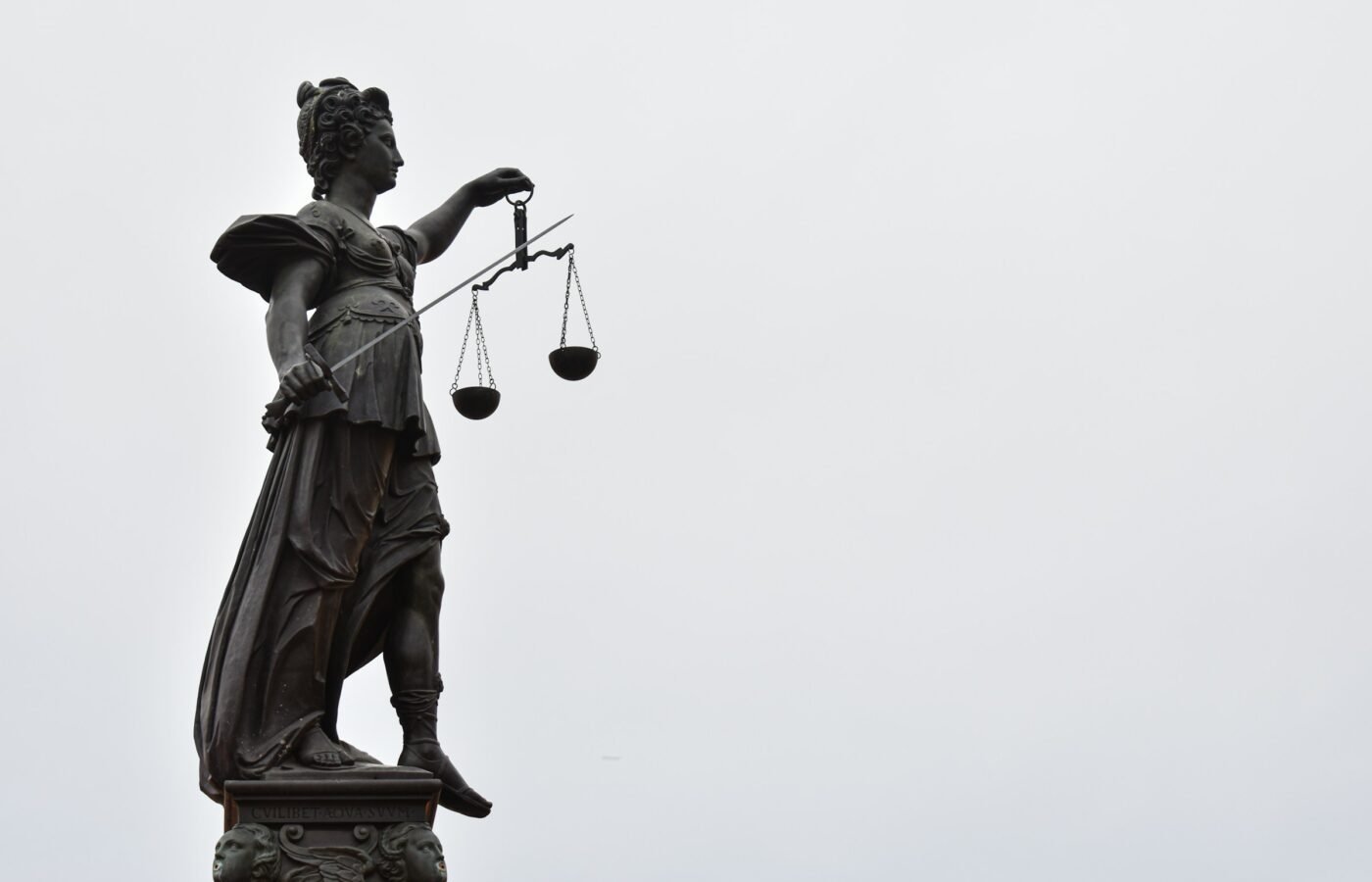
Featured image: Photo by Gaétan Marceau Caron on Unsplash — Lady Justice statue. Used under the Unsplash License.