The three questions
The Senate asked four retired justices a question that sounds like arithmetic. It isn’t. It is a question about what the Constitution still means when four chairs are empty.
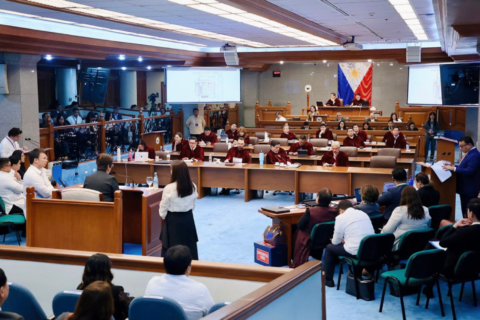
On 16 September 2026 the impeachment court heard retired Chief Justices Hilario Davide Jr., Artemio Panganiban, and Reynato Puno, and retired Associate Justice Adolfo Azcuna, as amici curiae. Davide sent a memorandum. The others came in person.
Senator Erwin Tulfo had asked the court to look again at Presiding Officer Francis Escudero’s ruling that conviction of Vice President Sara Duterte takes 16 votes. That number comes from two-thirds of 24. Four senators have not been sitting. Detention. Medical leave. Flight from process.
The court put three questions.
Does “all the Members of the Senate” mean the full 24, or only those able to sit, hear evidence, and vote?
Does Avelino v. Cuenco decide who is counted?
May a senator-judge who missed much of the trial still vote at the end?
They split 3–1 on the first one. That is the one that matters.
What the amici argued
Davide, Panganiban, and Puno
They would let the fraction move. Count the senators who can still function as senator-judges. A hard 16, they said, can turn into absurdity when members are detained, abroad, or beyond the court’s reach.
Avelino was a quorum case under the 1935 Constitution. Not controlling. Useful, they thought, by analogy.
They did not agree about participation. Panganiban wanted judges who had seen the witnesses. Davide treated total absence like absence beyond reach, and left partial attendance to conscience. Puno said a record can be enough. Other judges decide from transcripts. So can these.
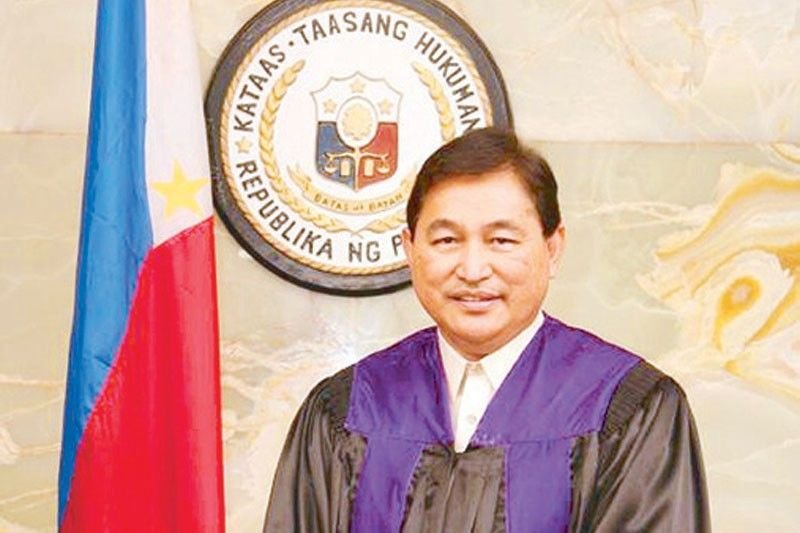
Azcuna
He stood alone. If the man is still a member of the Senate, he stays in the denominator. Death, resignation, removal. Those end membership. Detention and leave do not.
All means all.
The supermajority was written so a faction could not shrink the body and then convict. If no Senate rule bars the vote, he would let an absent member vote from the record under the oath already taken.
Strongest and weakest
Davide’s strength is that he was a framer. He can talk about capacity, not only vacant seats. The weakness is the memorandum. It could not be tested live. And Avelino on quorum is still only an analogy when the clause in front of us is conviction.
Panganiban’s strength is the trial. An impeachment Senate is not a counting house. The weakness is what happens next. Once the court starts dropping sitting members mid-trial, “qualified” becomes a political filter.
Puno’s strength is the forum. The Senate has the sole power to try and to make its rules. A number that never moves can freeze the process. The weakness is obvious. The same body that gains from a smaller denominator will be the body that says who is “able.”
Azcuna’s strength is the words the Commission wrote, and the reason for a supermajority. It forces a coalition wider than ordinary party lines. The weakness is formal. If many members are disabled, the court can look paralyzed. He treats membership as a legal status that practical incapacity does not erase.
All means all
I am not counsel for either panel. This is how I read the clause.
I agree with Azcuna.
Article XI, Section 3(6) says no person shall be convicted without the concurrence of two-thirds of all the Members of the Senate. It does not say those present. It does not say a quorum. It does not say whoever is convenient to count that week. It says all the Members.
Azcuna was vice-chair of the committee that drafted the accountability article. He was in the room. On 16 September he stayed with the words. So long as a senator remains a member, that senator belongs in the denominator.
There is a reason they wrote it that way. Impeachment is political in origin and judicial in form. A simple majority can pass a bill. A simple majority can even impeach in the House. Conviction was meant to take a coalition that cuts across ordinary lines. That is the point of a supermajority.
If the denominator can be reduced by detention, flight, or medical leave, the protection shrinks at the exact moment it is most needed.
One side need only disable enough of the other. The fraction moves. The framers had just lived through that kind of politics. They were not naïve.
I hear the objection. Some senators cannot physically sit. Are we to pretend they are there?
The Constitution knows how to speak of vacancies when it wants to. It did not do so here. Membership is a legal status, not an attendance sheet. A detained senator is still a senator until the seat is vacated by law. A senator on medical leave abroad is still a senator. Treat incapacity as automatic subtraction and you rewrite the clause after the trial has begun.
Avelino v. Cuenco, G.R. No. L-2821 (1949), does not rescue the other view. It decided how many senators made a legislative quorum when some were beyond the Senate’s reach. It was not impeachment. It was not the 1987 text. It did not construe a two-thirds-of-all-members conviction rule. Analogy is not identity.
The case I start with is Bayan v. Zamora, G.R. No. 138570, 10 October 2000. Same phrase. Two-thirds of all the Members of the Senate. One seat vacant. Twenty-three in office. Eighteen voted to concur in a treaty. The Court still treated sixteen—two-thirds of twenty-four—as the requirement. I will not give those words a smaller denominator because this case is impeachment instead of a treaty.
The participation question is closer. A trial court that never hears the witnesses is a poorer court. Panganiban was right to feel that. Even there Azcuna’s caution holds. The Senate can write its own rule. The oath already taken binds the senator-judge to the Constitution and the evidence, including the record. If the Senate has not forbidden the vote, conscience under oath is what remains. That is not ideal. It is what the text left standing.
I will not pretend an uninformed vote keeps the oath. A senator who has not read the record and votes from faction alone is not doing impartial justice. That is counsel to the voter. It is not a rewrite of the membership count.
The other three offered functional readings. Contextual. Commonsensical. They have a humane appeal. They also invite the mischief the supermajority was written to stop. Once the court may redefine the body that must convict, the body that benefits from the new number draws the line. That is not interpretation. That is revision under the pressure of the case at bar.
The Constitution is not an equation that must be adjusted so the machine keeps running. It is a settlement.
Removal of a high officer takes two-thirds of the whole Senate. Not two-thirds of whoever could walk into the hall that week.
Azcuna refused to pretend the settlement said something else. That is why his view is the strongest.
Background: Joanne Rae M. Ramirez, “Justice Adolfo S. Azcuna: Winning the gold with his silver,” Philippine Star, 23 June 2023.